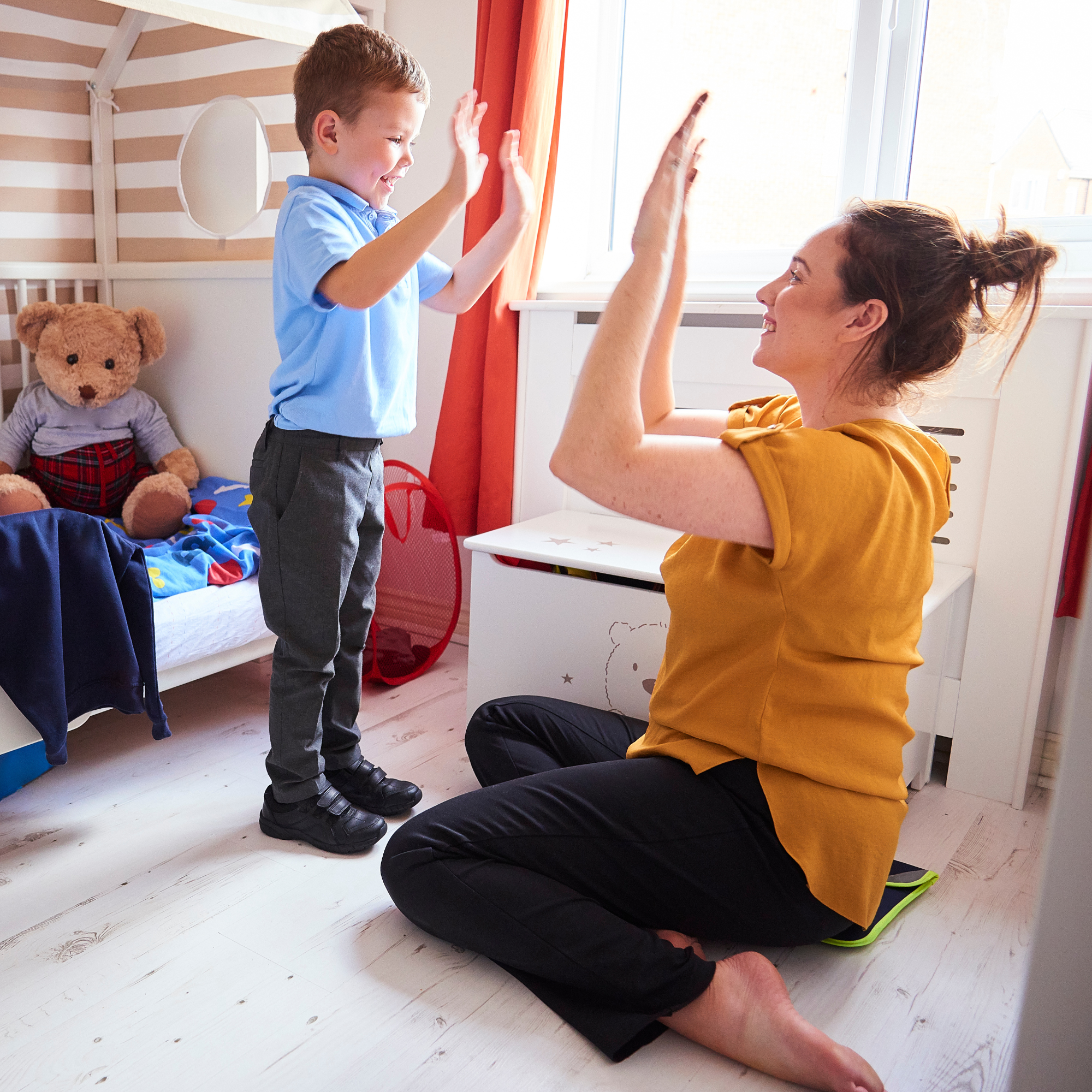

Why Is a Bedtime Routine Important for Kids?
A predictable bedtime routine helps signal to your child’s body and brain that it’s time to wind down and sleep. Research shows that consistent bedtime routines are linked to better sleep outcomes, including falling asleep faster, fewer night wakings, and longer overall sleep time (Mindell et al., 2015).
Sleep struggles are common for many children, but research suggests that children with autism spectrum disorder (ASD) face an even higher risk of sleep disruptions, including trouble falling asleep, staying asleep, or sleeping in their own beds (Mindell et al., 2015). When a child doesn’t sleep well, the whole family feels it. The good news is that building a sleep schedule and routine is one of the most effective first steps many families can take.
When Should I Start a Bedtime Routine?
It’s never too early, and it’s never too late. Experts recommend introducing a sleep routine around 10 to 12 weeks of age. At this stage, babies aren’t developmentally ready to sleep through the night, but starting a routine early helps build the foundation for healthy sleep habits as they grow (Mindell et al., 2015).
If your child is older, you can absolutely start now. The most important factor isn’t when you start. It’s how consistently you follow the routine once it’s in place. Occasional changes are okay, but keeping the core steps the same night after night helps the routine do its job.
What Does a Calming Wind-Down Look Like?
A bedtime routine typically begins 30 to 60 minutes before lights-out. This is the time to shift away from anything stimulating, such as homework, screen time, active play, or a big meal, and toward activities that help your child relax.
Calming wind-down activities might include:
- Taking a warm bath
- Reading a book or magazine together
- Talking quietly about the next day’s plans
Every child is different, so what feels calming for one child may not work for another (Mindell et al., 2015). Pay attention to what helps your child settle, and build the routine around that.
What Should the Bedtime Routine Itself Include?
Once the wind-down period starts, the routine itself should follow a predictable sequence. A typical bedtime routine might include:
- Brushing teeth
- Putting on pajamas
- Reading a bedtime story
- Turning on a nightlight
- Tucking in under the covers
The order matters less than the consistency. If your child brushes their teeth, then puts on pajamas, then reads a story before bed, try to keep that same order every night. A predictable sequence makes bedtime easier to anticipate, which can reduce resistance and help your child feel more in control of what comes next.
Over time, a consistent routine can also strengthen the connection between bedtime and relaxation, helping your child learn to settle into sleep more independently.
How Do I Adjust the Routine for My Child’s Needs?
Bedtime routines work best when they’re built around your child, not a one-size-fits-all template. This might mean choosing a familiar, comforting story instead of a new one, using a visual schedule to show each step in order, or adjusting the timing to match your child’s natural rhythms.
For children with autism, predictability often plays an especially important role in feeling calm and secure. Visual supports, such as picture cards showing each bedtime step, can help some children follow the routine more independently.
Travel, illness, or special occasions may require small adjustments. When that happens, try to return to the regular routine as soon as you can. The goal isn’t perfection. It’s consistency over time.
FAQ: Bedtime Routines for Kids
How long does it take for a bedtime routine to start working? Many families notice changes within a few weeks of consistent practice, though every child is different. Sticking with the routine, even on harder nights, gives it the best chance to work.
What if my child resists the bedtime routine at first? Some resistance is normal, especially when a routine is new. Keeping the steps calm, predictable, and the same each night can help your child adjust over time.
Can a bedtime routine help if my child has autism? Yes. Children with autism may be at higher risk for sleep difficulties, and many families find that a consistent, predictable routine, sometimes paired with visual supports, helps their child feel more secure at bedtime (Mindell et al., 2015).
What’s the difference between a sleep schedule and a bedtime routine? A sleep schedule refers to consistent wake and sleep times. A bedtime routine is the sequence of calming activities leading up to sleep. Both work together to support better rest.
What if the routine still doesn’t help my child sleep better? A consistent routine is a strong first step, but it doesn’t resolve every sleep challenge. If your child continues to struggle with falling or staying asleep, additional support may help.
Key Takeaways and Next Steps
Building a consistent sleep schedule and bedtime routine can help your child fall asleep more easily, wake up less during the night, and feel more secure overall. Start with small, calming steps before bed, keep the sequence predictable, and adjust as needed for your child’s individual needs.
If your child is still struggling with sleep after establishing a routine, you’re not alone. This is Part 1 of our 3-part Sleep Series. In Part 2, we’ll cover what to do when schedules and routines aren’t enough, and Part 3 addresses what to do when your child has trouble staying asleep.
For families looking for additional support, GBS offers a Sleep Workshop and one-on-one Sleep Coaching through the Thrive by GBS program.
Sources
- Mindell, J. A., Li, A. M., Sadeh, A., Kwon, R., & Goh, D. Y. (2015). Bedtime routines for young children: a dose-dependent association with sleep outcomes. Sleep, 38(5), 717–722. https://doi.org/10.5665/sleep.4662
- Abel, E., Kim, S. Y., Kellerman, A. M., & Brodhead, M. T. (2016). Recommendations for identifying sleep problems and treatment resources for children with autism spectrum disorder. Behavior Analysis in Practice, 10(3), 261–269. https://doi.org/10.1007/s40617-016-0158-4