
What Is Co-Regulation?
Co-regulation is when a calm adult helps a child manage their emotions in the moment. Before kids can fully self-regulate, they need support from a trusted adult who models calm behavior and provides a sense of safety.
Think of it like this: your nervous system helps steady theirs.
When a child is overwhelmed, logic does not work yet. Connection comes first. Once they feel safe, they can begin to calm down and eventually problem-solve.
Why Co-Regulation Matters
Children are not born knowing how to manage frustration, anger, or sadness. They learn it through repeated experiences with caregivers.
Co-regulation helps children:
- Feel safe during emotional moments
- Learn how to calm their bodies
- Build long-term self-regulation skills
- Strengthen trust and connection with caregivers
Over time, these shared calming experiences turn into independence.
Think of it like this: your nervous system helps steady theirs.
When a child is overwhelmed, logic does not work yet. Connection comes first. Once they feel safe, they can begin to calm down and eventually problem-solve.
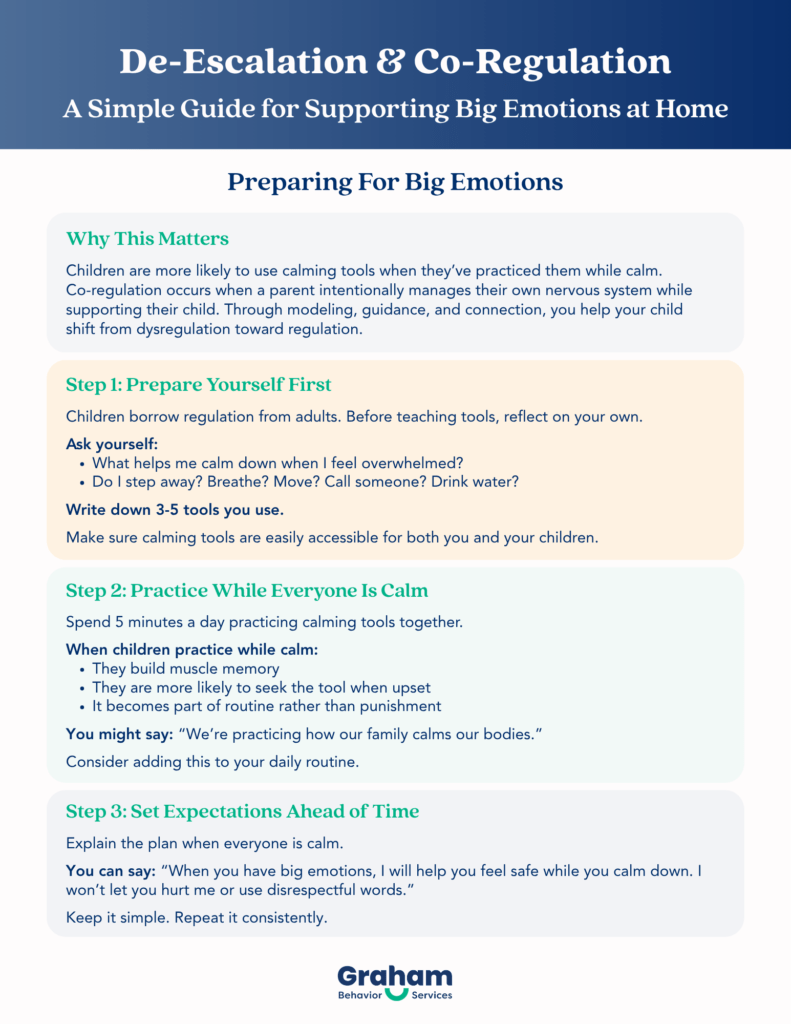
How to Prepare Ahead of Time
Co-regulation works best when it is practiced before a meltdown happens.
Here are simple ways to set yourself up:
- Create a list of calming tools you already use when stressed (deep breathing, quiet time, movement)
- Make these tools easy to access for both you and your child
- Practice calming activities for 5 minutes daily when everyone is calm
- Add these practices into your routine, like before bed or after school
- Let your child know what to expect: “When you have big feelings, I will help you feel safe and calm”
- Set clear boundaries: “I will help you, but I won’t let you hurt me or speak disrespectfully”
The more familiar these tools feel, the more likely your child will use them during tough moments.
What to Do During a Meltdown
When emotions escalate, your role is to stay grounded and guide, not fix immediately.
Start with these steps:
- Remove the trigger or pause the activity if possible
- Separate siblings if needed to reduce stimulation
- Use simple, validating language
- “I see you are upset. That tells me you’re feeling mad.”
- “I’m here to help you stay safe.”
- “We can talk about this when you’re calm.”
- Keep your tone steady and your words minimal
Just as important, check in with yourself:
- Are you calm and present?
- Do you need a breath before responding?
A helpful rule: focus about 70 percent on regulating yourself and 30 percent on guiding your child.
Easy Co-Regulation Activities
Invite your child to join you, but do not force it. Modeling is powerful.
Try these simple activities:
- Blow bubbles to encourage slow breathing
- Pretend to blow up a balloon with deep breaths
- Give a firm bear hug (with consent)
- Ask the child to lay down, and press a pillow over different parts of their body (with consent and avoiding the face completely). This pressure can be very soothing.
- Push into a nearby wall as hard as you can, trying to knock the wall over
- Follow a children’s guided meditation video together (box breathing, butterfly breathing, etc.)
- Scream or push into a soft toy
- Pick up a pillow or other soft object over your head, then slam it into the ground (when safe)
- Play with slime for sensory input
These activities help bring the body back to a calm state.
After the Moment Passes
Once your child is calm, that is the time for reflection.
Keep it simple:
- Ask: “How do you think that went?”
- Share your own thoughts calmly
- Talk about what might help next time
You can also use a simple debrief sheet to track patterns and progress.
Final Thoughts
Co-regulation is not about stopping behavior instantly. It is about building emotional safety and teaching lifelong skills through connection.
With consistency and practice, those intense moments become opportunities for growth instead of stress.
Download our free “De-Escalation & Co-Regulation Guide” for parents!