
When families begin ABA therapy, one of the most common questions is:
“Will these skills show up in real life?”
That question leads to one of the most important concepts in behavior analysis: generalization in ABA therapy.
What is Generalization in ABA Therapy?
Generalization in ABA therapy means a skill continues outside of the original teaching setting.
In simple terms:
Can your child use the skill in different places, with different people, and in different situations?
If a child learns to request help during therapy but does not ask for help at home or school, the skill has likely not generalized yet.
Generalization is what makes learning meaningful and practical.
Why Generalization Matters
ABA therapy is not about performing skills at a table. It is about building skills that improve everyday life because they carry over into many situations. If a child learns to request help during a therapy session but does not ask for help at home or school, the skill has probably not generalized yet.
Generalization is what makes learning meaningful.
When skill generalization occurs:
- Language is used across settings
- Social skills appear with peers, not just therapists
- Coping strategies work in public and at home
- Academic skills transfer to school
- Independence increases over time
Without generalization, progress stays inside therapy.
With generalization, progress becomes real-world growth.
The 2 Types of Generalization in ABA Therapy
Technically, there are two categories of generalization in behavior analysis:
- Stimulus Generalization
- Response Generalization
Both are essential for strong ABA therapy outcomes.
1. Stimulus Generalization
The situation changes, but the skill stays the same.
Stimulus generalization happens when a child uses a learned skill in new environments, with new people, or with new materials.
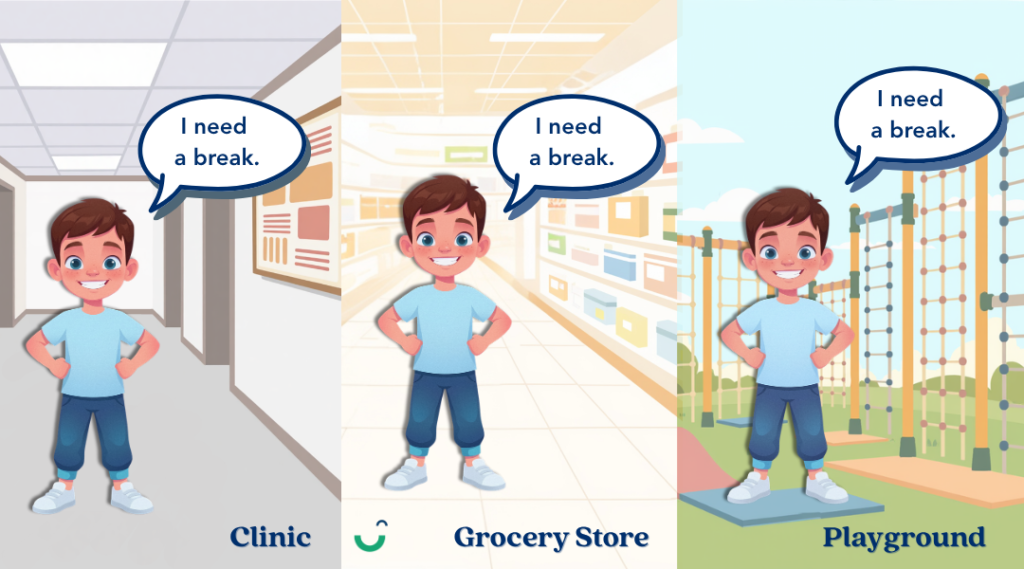
Example 1:
A child learns to say “I need a break” in the clinic and later uses it at the grocery store or playground.
The setting changed. The skill remains the same.
Example 2:
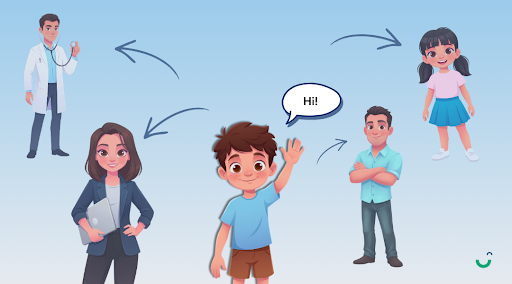
A child greets their therapist and then begins greeting teachers, grandparents, or peers.
The people changed. The greeting behavior stayed consistent.
Example 3:
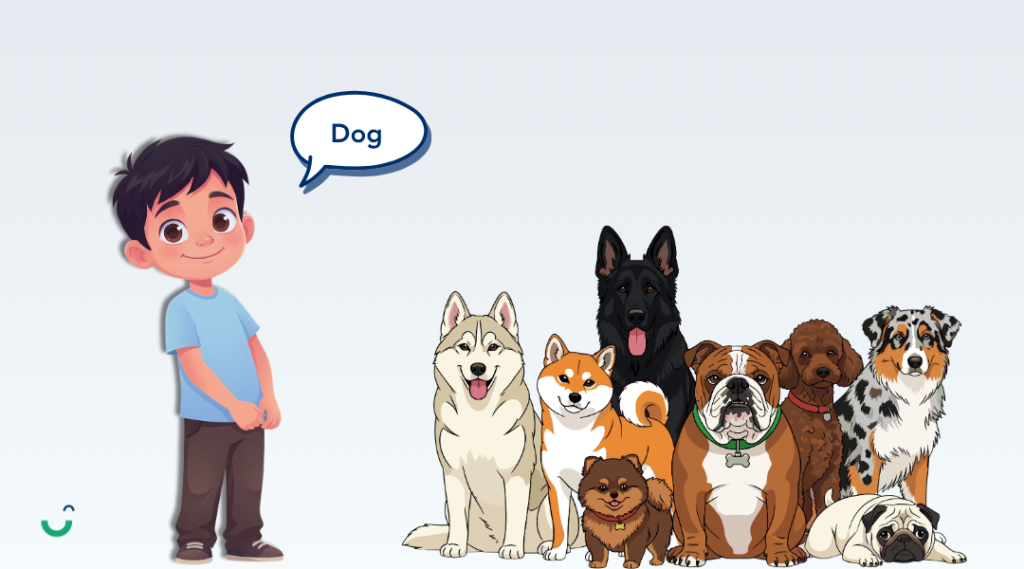
A child learns to label a terrier, pug, and golden retriever as “dog.”
Later, they see a dachshund, German shepherd, or bulldog and still say “dog.”
The appearance changed. The concept remained the same.
2. Response Generalization
The situation stays the same, but the response becomes more flexible.
Response generalization occurs when learning one behavior leads to related behaviors emerging naturally.
Example 1:
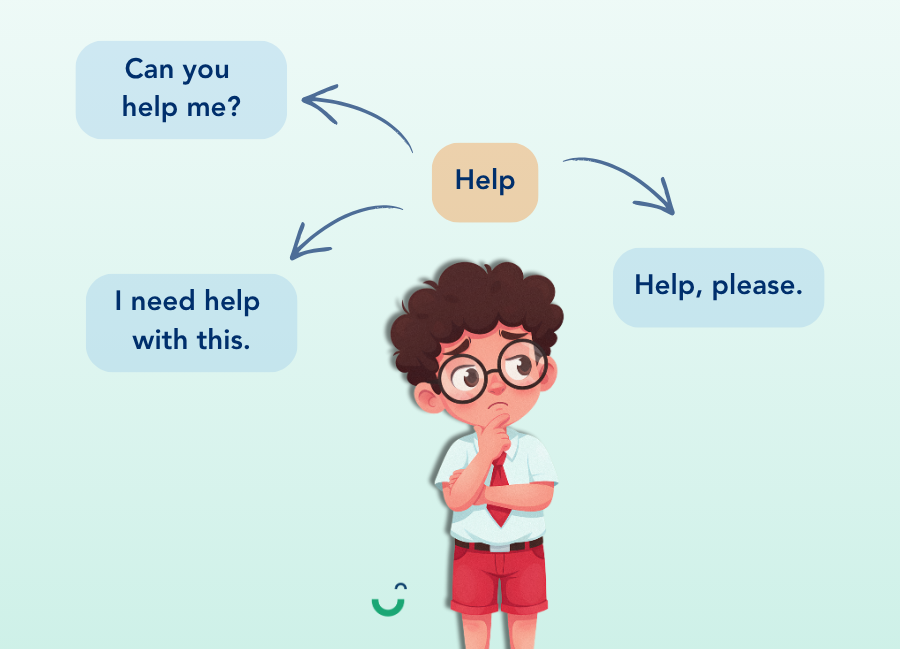
A child learns to say “Help.”
Later, they begin saying:
- “Can you help me?”
- “I need help with this.”
- “Help please.”
The request expands and becomes more socially appropriate.
Example 2:
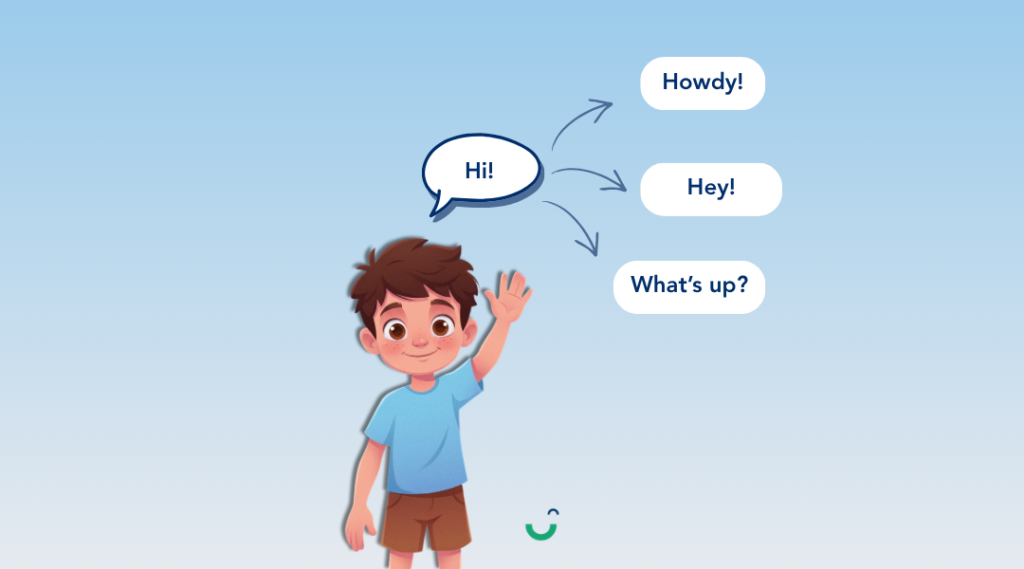
A child learns to say “Hi.”
Later, they begin saying:
- “Hey”
- “Howdy”
- “What’s up?”
No one directly taught each variation. The greeting behavior expanded.
How ABA Therapy Promotes Generalization
One of the most important things families should know is this:
Generalization does not happen by accident. It must be intentionally programmed and planned.
In ABA therapy, we do not assume a skill will automatically transfer to home, school, or the community. Instead, Board Certified Behavior Analysts actively design treatment plans to promote both stimulus and response generalization from the beginning.
We do this by:
- Teaching with many examples of a concept
- Practicing skills across different people
- Embedding skills in various situations
- Teaching in multiple locations
The goal is to help skills travel beyond the therapy room.
In Part 2 of this guide, we will explore the specific strategies therapists use to support generalization and how parents can help reinforce these skills at home.
👉 Continue reading Part 2: How ABA Therapy Supports Skill Generalization in Everyday Life
(Link coming soon)
Research Sources
Baer, D. M., Wolf, M. M., & Risley, T. R. (1968)
Some current dimensions of applied behavior analysis
https://onlinelibrary.wiley.com/doi/10.1901/jaba.1968.1-91
Stokes, T. F., & Baer, D. M. (1977)
An implicit technology of generalization
https://onlinelibrary.wiley.com/doi/10.1901/jaba.1977.10-349
Cooper, J. O., Heron, T. E., & Heward, W. L. (2020)
Applied Behavior Analysis (3rd ed.)
https://www.pearson.com/en-us/subject-catalog/p/applied-behavior-analysis/P200000003479
(Note: This is a textbook, so full access may require purchase or login.)
National Autism Center (2015)
National Standards Project, Phase 2
https://www.nationalautismcenter.org/national-standards-project/phase-2/
Schreibman, L. et al. (2015)
Naturalistic Developmental Behavioral Interventions
https://link.springer.com/article/10.1007/s10803-015-2407-8