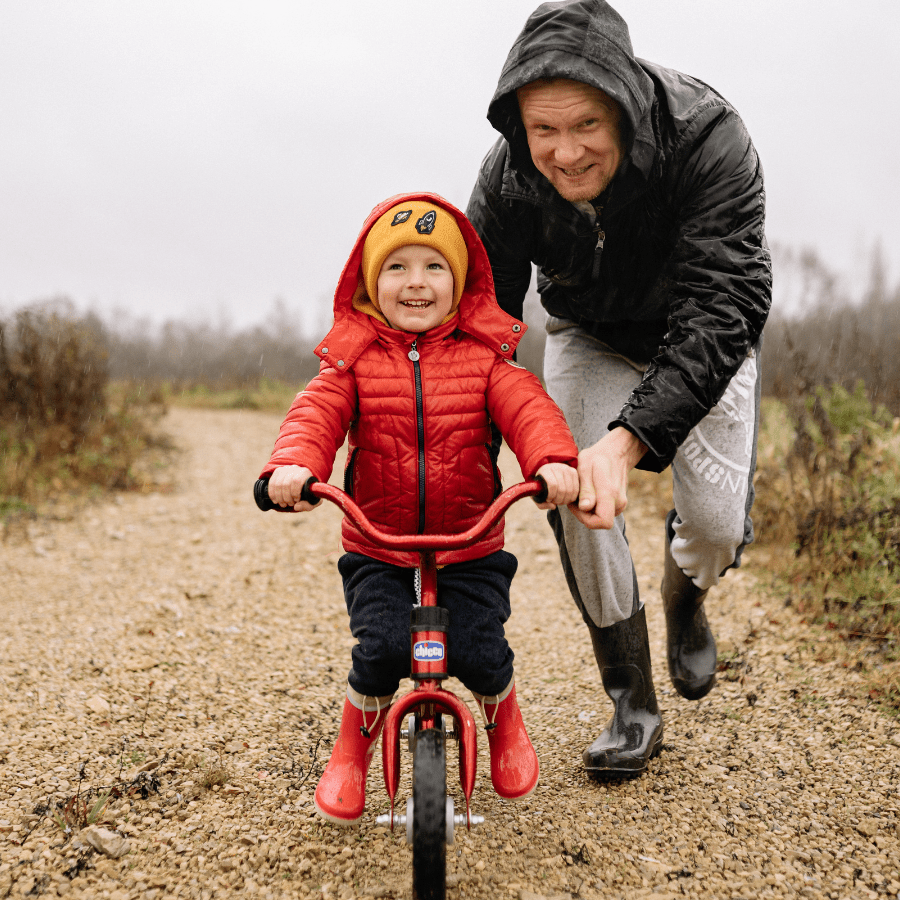
Bike riding is one of those skills that is always age-appropriate and can be revisited at many stages of development. Before getting started, children may need to learn how to wear a helmet. If they have little or no experience wearing one, this may take time to get used to. Try pairing helmet use with reinforcement and systematically increasing the amount of time they wear it to build comfort and tolerance.
To Use or Not Use Training Wheels?
Training wheels can make it more difficult to pedal and do not give children the opportunity to learn one of the most challenging parts of bike riding, balance. You may want to let a child try a bike with training wheels to see if they enjoy the activity, but overall, it is recommended to avoid relying on them long-term.
Learning balance early allows children to develop the core skills needed for independent bike riding.
How Do I Teach Bike Riding?
To help children get started, have them place both feet on the pedals and stand up while holding onto the handlebars. This position helps them gain initial momentum. After pedaling with each foot for a short time, they should have enough momentum to sit down and continue pedaling independently.
When providing support, try to hold only the back of the seat. This reduces how noticeable your assistance is and makes it easier to fade support as the child gains confidence and balance. If additional support is needed, place your other hand lightly on the handlebars between their hands.
The hand on the handlebars should be faded first. As the child begins to balance more independently, gradually lift your hand away. Once that support is no longer needed, begin fading the hand on the seat. Continue to stay close and shadow the child if needed to prevent falls. If the child starts to lose balance, quickly prompt them to place a foot on the ground.
Addressing Safety and Skill Readiness
One of the most important teaching components is pausing the activity if the child engages in behaviors that are incompatible with bike riding, such as closing their eyes, stopping the pedals, or letting go of the handlebars. This helps teach that these behaviors are not appropriate while riding a bike and supports safety and skill acquisition.
Most adult bikes use handle brakes, so it is helpful to teach bike riding with this type of brake whenever possible. Pedal brakes are also acceptable, but as children get older, they may require explicit instruction to transition to handle brakes. Teaching handle brakes from the beginning can reduce the need for additional bike riding instruction later on.
Ready to Get Started?
Interested in starting services or learning more about how we support skill development through evidence-based teaching strategies? Contact us to get the process started.