
If you have been thinking about getting some support for your own health, you have probably run into a lot of options. Personal trainers. Life coaches. Nutritionists. Wellness apps. It can feel overwhelming, especially when you are already managing so much.
One question that comes up often is: what is the difference between a health and wellness coach and a personal trainer? They both sound like they help you get healthier. But once you understand how they work, the difference becomes very clear, and for many caregivers, it changes everything.
What Is a Health and Wellness Coach, and How Is It Different From a Personal Trainer?
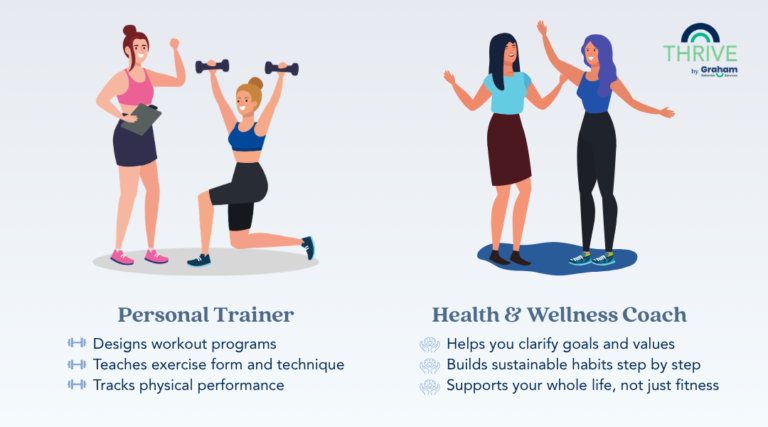
A health and wellness coach is a trained professional who partners with you to build sustainable habits across all areas of your life, not just fitness. A good wellness coach helps you clarify what you want, why it matters to you, and how to get there in a way that fits your actual life. Their work centers on guided conversation, reflection, and goal-setting, using techniques rooted in behavior change science to help you build habits that actually stick.
A personal trainer, on the other hand, is a fitness professional whose primary focus is physical exercise. Their work centers on exercise programming, physical performance, and building fitness-related skills. They design workout plans, teach proper form, track your physical progress, and guide you through direct instruction toward specific fitness goals. Personal trainers are experts in movement and exercise science, and that expertise is genuinely valuable when fitness is your primary need.
The key difference comes down to approach and scope. A personal trainer prescribes a plan based on physical goals. A health and wellness coach does not prescribe solutions at all. Instead, coaching uses client-centered conversations to help you explore your own motivation, values, and readiness for change. The coach’s role is to help you identify goals that feel personally meaningful, and then strengthen the intrinsic motivation that drives lasting change.
That distinction matters because a plan someone else designs for you, even a good one, often does not stick. Coaches guide clients toward goals that come from within, which research consistently shows leads to stronger follow-through and more sustainable results.
Personal trainers and wellness coaches are not opposites, and some people find value in working with both. But they serve very different needs, and for caregivers managing a complex home life, that difference is significant.
Why Caregivers of Children With Autism Often Need a Different Kind of Support
Raising a child with autism or a developmental disability is one of the most demanding and rewarding things a person can do. The appointments, the advocacy, social isolation, the behavioral strategies at home, the IEP meetings, the sleepless nights, the emotional labor. It adds up.
Research published in the Journal of Autism and Developmental Disorders has found that parents of children with autism experience significantly higher rates of stress, anxiety, and burnout compared to parents of neurotypical children. For many caregivers, their own health quietly falls to the bottom of the list, not because they do not value themselves, but because there is simply no bandwidth left.
When caregivers decide to do something for themselves, a gym membership or personal trainer can seem like the logical first step. But for many, the real barrier to well-being is not knowing which exercises to do. It is feeling too exhausted to begin, struggling to stay consistent when routines fall apart, or not knowing how to prioritize their own needs without guilt.
That is exactly where a health and wellness coach makes a difference. Coaching provides a supportive, nonjudgmental partnership that helps caregivers identify and pursue their own health goals while managing the ongoing demands of their role.
Supporting caregiver well-being also benefits the whole family. When caregivers have tools to manage stress, improve their health habits, and build resilience, research suggests they are often better equipped to show up consistently for the people who need them most.
What Does a Behavior-Based Wellness Coach Actually Do?
At Thrive by Graham Behavior Services, health and wellness coaching is provided by Laura Dolan, M.Ed., BCBA, NBC-HWC, a National Board Certified Health and Wellness Coach who is also a Board Certified Behavior Analyst (BCBA). That dual credential shapes every aspect of how coaching works.
Health and wellness coaches specialize in the process of behavior change. That specialization allows them to help individuals bridge the gap between knowing what to do and consistently doing it in a way that aligns with their values and goals. That gap is exactly where most well-intentioned plans fall apart, and it is where coaching does its most important work.
A behavior-based wellness coach helps you:
- Clarify what you actually want and what matters most to you, because goals rooted in your own values are far more motivating and meaningful than goals someone else assigned to you
- Break big goals into realistic, manageable steps that fit into the life you already have, and identify what is getting in the way, whether that is time, energy, environment, mindset, or habit patterns
- Support your autonomy, helping you make informed, self-directed choices, rather than following a plan that may not fit into your life
- Create systems of reinforcement that support long-term behavior change, building momentum that carries you forward even when motivation dips
- Build accountability and track progress in meaningful ways, with room to adjust and problem-solve when life gets complicated, because it always does.
Sessions are collaborative and client-centered. You set the direction. You are the expert on your own life. The coach’s role is to help you move from intention to action, one realistic step at a time.
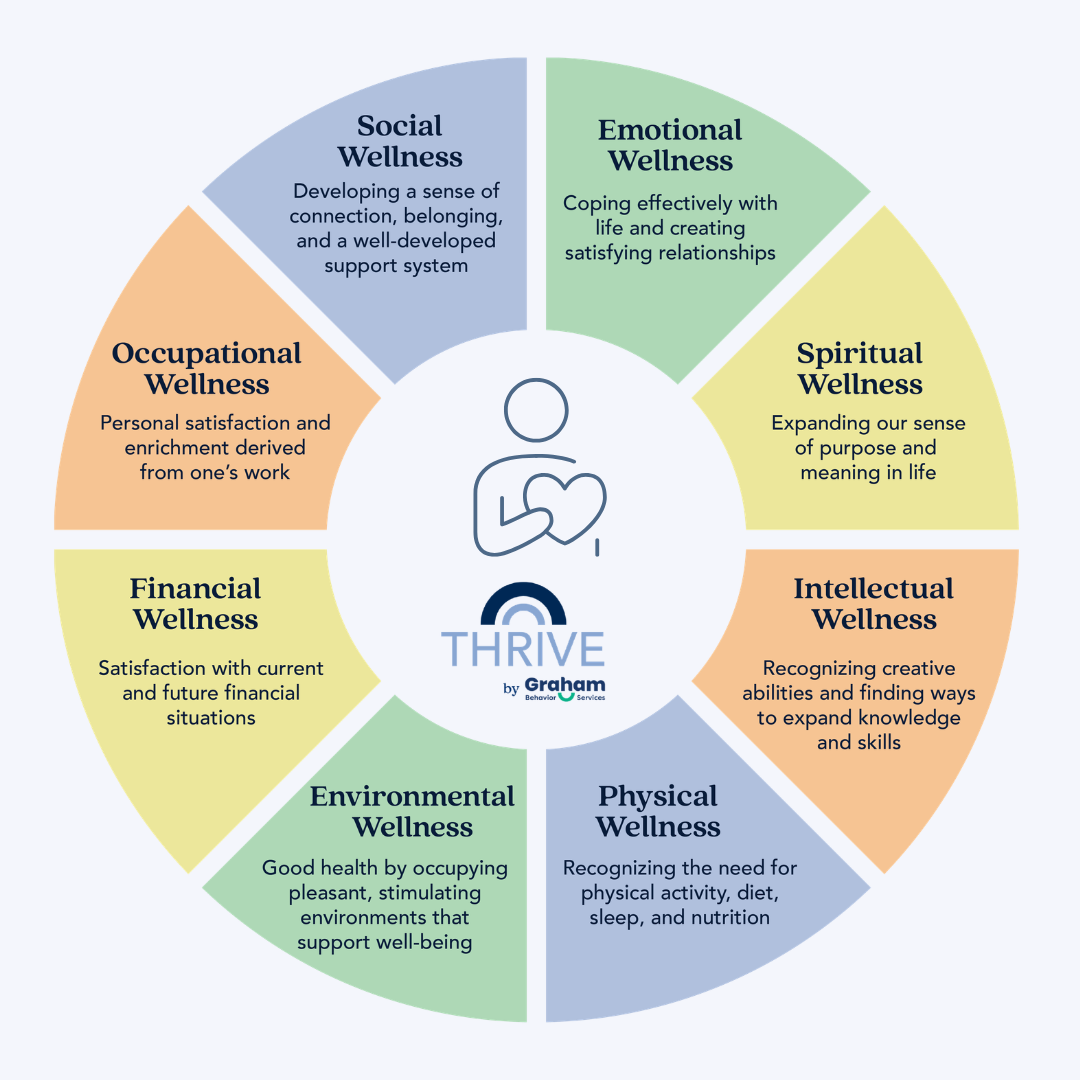
Coaching at GBS covers all eight dimensions of wellness, including physical, emotional, occupational, social, intellectual, spiritual, environmental, and financial wellness. Because well-being is not just about going to the gym. It is about how you feel when you wake up, how you manage stress, whether your life feels aligned with what matters most to you, and whether you have the energy to show up for the people who need you.
The 6 Key Differences Between a Wellness Coach and a Personal Trainer
Here is a straightforward side-by-side look at how these two roles differ:
- Scope of support A personal trainer focuses on physical fitness and exercise. A health and wellness coach addresses your whole life: movement, nutrition, sleep, stress, relationships, work-life balance, and emotional health.
- Who sets the agenda A personal trainer typically designs your workout program. In wellness coaching, you set the goals. The coach helps you clarify, plan, and follow through, but the direction always comes from you.
- How change happens Personal training relies on structured sessions where you perform exercises under direct guidance. Wellness coaching works through conversation, reflection, goal-setting, and action planning. Progress happens between sessions, in your daily life.
- A strengths-based approach to change Personal trainers focus on building physical capacity, often by identifying weaknesses and working to improve them. Wellness coaches take a different approach. Rather than focusing on what is not working, a coach actively helps you identify your existing strengths and use them to your advantage. That strengths-based lens shapes how goals are set, how barriers are approached, and how progress is recognized along the way.
- What counts as success For a personal trainer, success is often measured in reps, weight lifted, or miles run. For a wellness coach, success is defined by you. It might mean sleeping consistently, finding time in the day that belongs only to you, or feeling less depleted at the end of a difficult week.
- The role of behavior science Most personal trainers do not have formal training in behavior change science. A behavior-based wellness coach at GBS brings the evidence-based principles of Applied Behavior Analysis to the process, supporting habit formation, consistency, and sustainable change.
Why the Behavior Science Background Changes Everything
Applied Behavior Analysis, or ABA, is the scientific study of behavior and how it changes. Most people associate ABA with autism therapy for children. But the principles of behavior science apply to every human being, including you.
When a BCBA-trained wellness coach works with you, they bring expertise in:
- Why habits form and why they break down, and how to structure your environment to support the behaviors you want
- How to use reinforcement effectively, building motivation systems that actually work for your life
- How to set goals that are specific and measurable, not vague intentions that fade after a few weeks
- How to use data thoughtfully, helping you recognize patterns and acknowledge progress in ways that keep you moving forward
- How to individualize everything, because a one-size approach rarely fits the reality of a caregiver’s life
This is not about applying autism therapy to adults. It is about using well-researched principles of behavior change to help you build a life that feels more sustainable, more energized, and more aligned with what matters to you.
Frequently Asked Questions
Is a health and wellness coach the same as a therapist? No. Health and wellness coaching is not therapy and does not treat mental health conditions. Coaching is future-focused and action-oriented, helping you clarify goals, build habits, and move forward. If you are experiencing significant anxiety, depression, or other mental health concerns, a licensed therapist is the appropriate support. Coaching and therapy can complement each other effectively for many people.
Do I have to be focused on weight loss or fitness to work with a wellness coach? Not at all. Coaching at GBS covers every dimension of well-being, including stress, sleep, relationships, energy, and work-life balance. Many clients come in with goals that have nothing to do with the gym. Your goals are the starting point, whatever they are.
I am already so busy. How does coaching actually fit into a caregiver’s life? Sessions are collaborative and practical, focused on what is achievable within your actual schedule, not an idealized version of your life. The goal is never to add more to your plate. It is to help you identify what belongs on the plate and how to make room for yourself within the life you already have.
How is this different from just googling wellness tips or following a program online? A program or app can provide information, but it cannot listen to what is actually happening in your life, help you problem-solve when things fall apart, or adjust the plan when your week looks nothing like you expected. It also cannot help you dig into what you truly value or uncover the motivation that will actually sustain change over time. Coaching is a professional relationship with someone who knows your history, your goals, and your barriers, takes the time to understand what drives you, and stays with you through the process.
Does my insurance cover health and wellness coaching? Health and wellness coaching at Thrive by GBS is a private-pay service and is not currently covered by insurance. Contact GBS to learn more about fees and to schedule your free consultation.
Taking the Next Step
You invest a great deal in making sure the people you love are supported. Health and wellness coaching is one way to make sure you are supported too.
If you are curious about what coaching could look like for your life, the best next step is a free consultation with Laura Dolan. No pressure, no commitment. Just a conversation to explore whether it feels like the right fit.
Schedule your free consultation here.
For more on the science behind this approach, read: How the Science of Behavior Supports Health and Wellness Coaching.
Sources
- Clear, J. (2018). Atomic Habits: An Easy & Proven Way to Build Good Habits & Break Bad Ones. Avery (Penguin Random House).
- Caregiver stress and burnout in autism families Benson, P.R. (2014). Coping, distress, and well-being in mothers of children with autism. Research in Autism Spectrum Disorders, 8(6), 682–695. https://doi.org/10.1016/j.rasd.2014.03.006
- Evidence base for health and wellness coaching Wolever, R.Q., et al. (2013). Integrative health coaching for patients with type 2 diabetes: A randomized clinical trial. The Diabetes Educator, 36(4), 629–639. This study, along with a broader body of research, supports the effectiveness of health coaching for sustainable behavior change. https://doi.org/10.1177/0145721710371523
- Applied Behavior Analysis and habit/behavior change Cooper, J.O., Heron, T.E., & Heward, W.L. (2020). Applied Behavior Analysis (3rd ed.). Pearson. This is the foundational textbook of the field and supports all references to ABA principles including reinforcement, shaping, and goal measurement.
- Habit formation and behavior change timelines Lally, P., et al. (2010). How are habits formed: Modelling habit formation in the real world. European Journal of Social Psychology, 40(6), 998–1009. https://doi.org/10.1002/ejsp.674 This supports the recommendation for a minimum six-month coaching commitment.
- Wellness Wheel framework The Wellness Wheel model referenced in the post is broadly attributed to Dr. Bill Hettler, co-founder of the National Wellness Institute (NWI). https://www.nationalwellness.org